


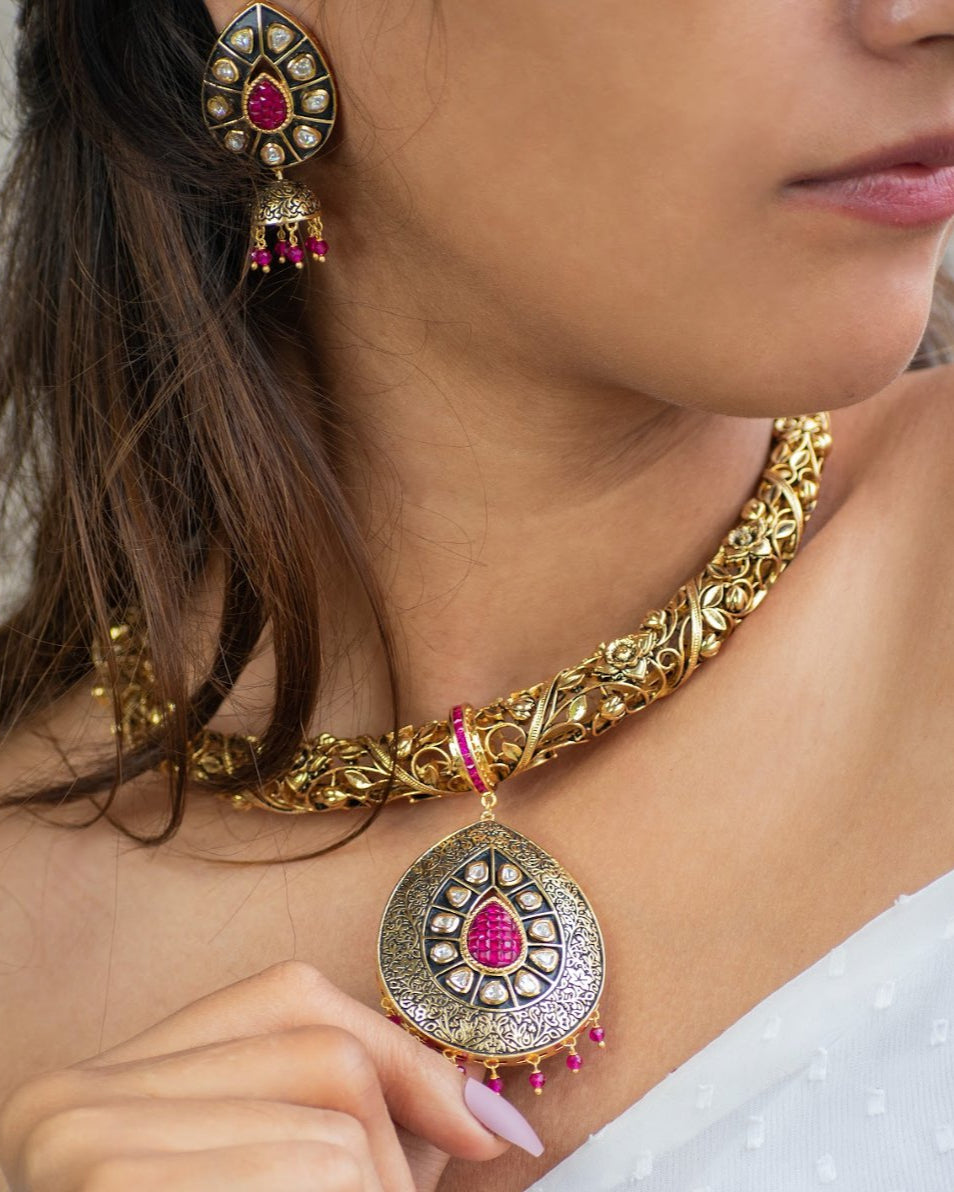


What Is Kundan Jewellery?
Kundan is one of India's oldest jewellery-making traditions, originating in the royal courts of Rajasthan and Gujarat. The word Kundan literally means "pure gold" in Hindi, and the technique is defined by the use of highly refined gold foil to set gemstones — traditionally glass, quartz, or semi-precious stones — into a base metal frame.
The process involves skilled artisans pressing 24-karat gold foil (called kundan) around each stone by hand, creating a seamless, polished setting that holds the stone firmly without the use of prongs or claws. The result is a flat, refined look with rich colour and a distinctive glow.
Key characteristics of Kundan jewellery:
- Gold foil setting with coloured glass or semi-precious stones
- Flat, polished surface with an opulent finish
- Often features meenakari (enamel) work on the reverse side
- Rich reds, greens, blues, and whites are the most common colours
- Heavier and more structured in appearance
Kundan jewellery is ideal for brides, festive occasions, and anyone who wants a traditional yet maximalist look.
What Is Polki Jewellery?
Polki jewellery is also rooted in Mughal-era craftsmanship, but the defining element here is the stone itself rather than the setting technique. Polki refers to uncut, natural diamonds in their raw form — exactly as they come out of the earth, without faceting or shaping.
These rough diamonds are set into gold using a lac (a natural resin) base, which gives Polki its signature soft, organic shimmer. Unlike Kundan, Polki stones are not uniform — they vary in shape, size, and transparency, which is part of their rustic, heirloom charm.
Key characteristics of Polki jewellery:
- Uncut, raw diamonds (or diamond simulants in fashion jewellery)
- Irregular, organic stone shapes that vary piece to piece
- A softer, more muted shimmer compared to faceted diamonds
- Often combined with gold meenakari or Kundan accents
- Has an antique, heirloom quality
Because authentic Polki uses real uncut diamonds, traditional Polki jewellery is significantly more expensive. However, high-quality artificial Polki jewellery uses uncut diamond simulants — often called polki stones — to recreate the same look at a fraction of the price.
Kundan vs Polki: Side-by-Side Comparison
| Feature | Kundan | Polki |
|---|---|---|
| Origin | Rajasthan & Gujarat | Mughal courts |
| Defining element | Gold foil setting technique | Uncut diamond or simulant stones |
| Stone type | Glass, quartz, or semi-precious | Raw diamonds or polki simulants |
| Finish | Flat, polished, vivid colour | Soft, organic, rustic shimmer |
| Occasion | Bridal, festive, traditional | Bridal, heritage, Indo-western |
| Typical price (artificial) | ₹2,000 – ₹25,000 | ₹4,000 – ₹50,000 |
Which One Should You Choose?
The right choice depends on your outfit, occasion, and personal style.
Choose Kundan if you love bold colour, are wearing a heavily embroidered lehenga or saree, or want jewellery that makes a vibrant statement. Kundan pairs beautifully with deep jewel tones — emerald green, ruby red, sapphire blue.
Choose Polki if you prefer a more muted, understated elegance. Polki's raw diamond look has an antique quality that works beautifully with pastels, ivory, and off-white outfits — especially for brides who want a heritage aesthetic.
Can you mix them? Absolutely. Many of the most stunning bridal looks combine Kundan necklaces with Polki earrings, or wear Kundan and Polki sets that blend both techniques.
Frequently Asked Questions
Is Kundan and Polki jewellery the same?
No. Kundan refers to the gold foil setting technique used to hold stones, while Polki refers specifically to uncut diamonds or their simulants. A piece can feature both — Polki stones set using the Kundan technique, for example — but they are distinct concepts.
Is artificial Kundan jewellery good quality?
Yes, when crafted well. Premium artificial Kundan jewellery uses gold-plated or micron gold bases with high-quality glass or stone inserts, and can look virtually identical to fine Kundan at a fraction of the price. Look for brands that use micron plating for longer-lasting finish.
Which is more expensive — Kundan or Polki?
Authentic Polki jewellery is almost always more expensive because it uses real uncut diamonds. In the artificial/fashion jewellery space, pricing depends more on the quality of materials and craftsmanship than the category.
Can I wear Kundan jewellery every day?
Kundan jewellery is best reserved for occasions rather than daily wear. Avoid contact with water, perfume, and chemicals to preserve the gold plating and stone settings.
How do I clean Kundan jewellery?
Wipe gently with a soft, dry cloth after each use. Avoid water or chemical cleaners. Store in a separate soft pouch or the original box to prevent scratches.
Shop MR Jewels' Kundan Collection
At MR Jewels, every Kundan piece is crafted with precision — using micron gold plating, handpicked stones, and traditional setting techniques that honour the heritage of this art form. Whether you are a bride looking for a complete set or simply want to add one statement necklace to your collection, our Kundan range has something for every occasion and budget.
Explore our Kundan jewellery collection → mrjewels.in/collections/kundan-jewellery
From choker sets and long necklaces to matching earrings and bangles — all available with free shipping and easy 2-day returns across India.
Have a question about styling or choosing the right piece? WhatsApp us at +917042306142 — we're happy to help.


